

Why a Kart Racing School Is the Perfect Experience for Thrill Seekers
/
Why a Kart Racing School Is the Perfect Experience for Thrill Seekers
You've done the roller coasters. You've done the zip line, the skydive, maybe the shark cage. Each one delivered the spike of adrenaline you were after, and each one had the same quiet flaw: you were a passenger. Someone else strapped you in, pulled the lever, or flew the plane. The thrill was real, but the control wasn't yours.
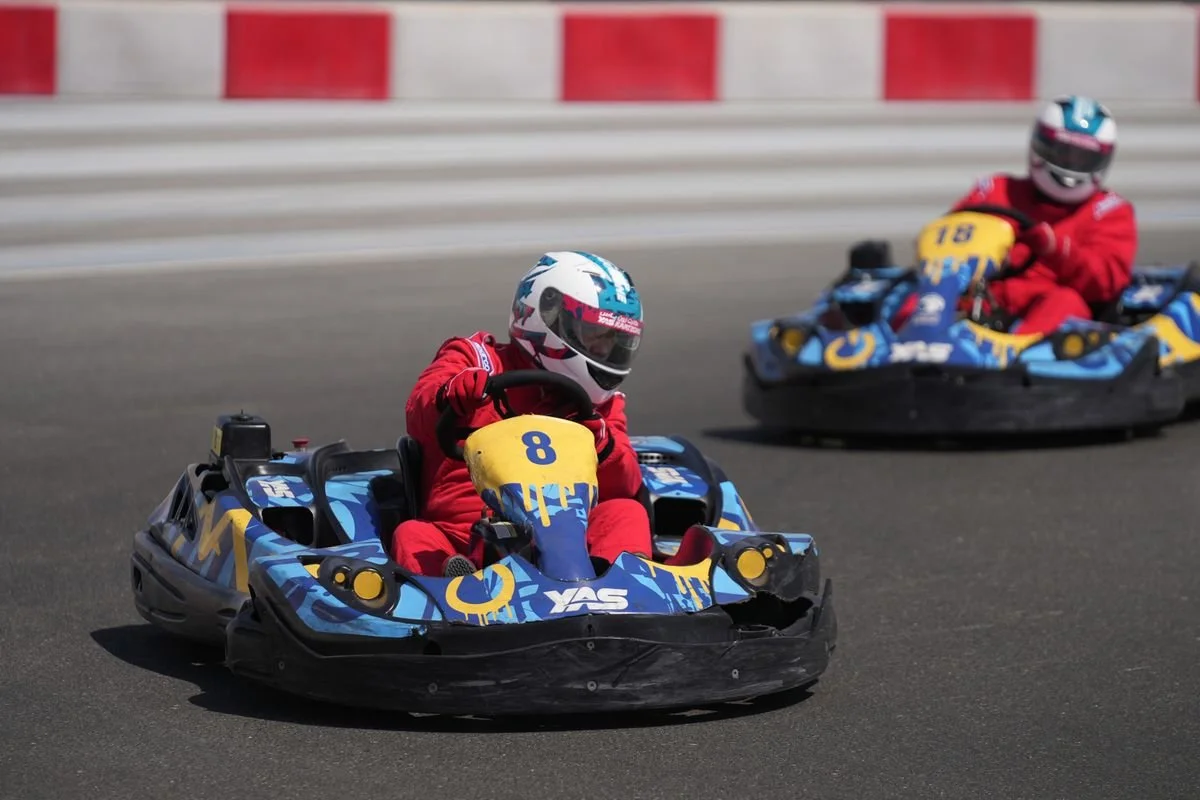
Then you fold yourself into a racing kart, inches off the asphalt, with a steering wheel the size of a dinner plate and an engine buzzing behind your spine. An instructor talks you through the first lap. On the second you brake later. On the fifth, you take a corner faster than you thought possible and feel the kart slide and catch under your own hands. Nobody did that for you. That's the difference a kart racing school makes, and it's why thrill seekers who try it tend to come back.
Speed Has Never Been More Popular
The appetite for motorsport is at an all-time high. According to Formula 1, the sport's global fanbase reached 827 million in 2025, up 63 percent since 2018, while four race weekends drew more than 400,000 spectators each, and F1: The Movie became the highest-grossing sports film of all time, with more than $630 million at the box office.
Millions of those fans watch and wonder what it would feel like. Karting is the closest most people will ever get to the answer, and it's where nearly every professional driver started.
The Thrill Is Real, Not Simulated
Karts are low, light, and quick. Sitting a few centimeters above the track, with no suspension and no bodywork between you and the air, even moderate speeds feel ferocious.
The forces through a fast corner are genuine, the braking is sharp, and the feedback through the wheel and seat is immediate. It's the rawest form of driving there is, which is exactly what makes it so addictive for people who chase intensity.
You're in Control the Whole Time
Unlike most adrenaline experiences, karting puts every decision in your hands:
● Where to brake and how hard
● When to turn in and where to clip the apex
● How early to get back on the throttle
● How to recover when the rear steps out
● How to pass a slower driver cleanly
The thrill scales with your skill. Every lap you learn something that makes the next lap faster, and that progression is a high in itself.
Learning From People Who Race
The difference between an afternoon at a rental track and a racing school is instruction. A proper school teaches racing lines, braking technique, weight transfer, and race craft, then lets you apply it immediately on a real circuit. Signing up for a kart racing school gives a thrill seeker structure as well as speed: classroom basics, instructor-led sessions, feedback between runs, and a safe environment to push harder than you would on your own.
At Road America, the school runs on the venue's dedicated karting circuit, alongside its driving and motorcycle schools, autocross, drifting, and a season of professional racing on the main road course, so students are learning at a place built around speed.
Whichever school you choose, look for small groups, experienced instructors, well-maintained karts, and a program that progresses from fundamentals to real lapping.
It's Accessible to Almost Everyone
Karting asks for very little before you start:
● No racing licence or prior experience
● No special fitness beyond being able to climb into a kart
● Gear such as helmets and suits is usually provided
● Sessions run from a single day to multi-day programs
● Costs are a fraction of car-based driving schools
It's the rare adrenaline sport you can try on a Saturday and be competent at by Sunday.
A Workout for Body and Mind
Driving a kart hard is more physical than it looks. Your neck, core, arms, and legs all work against the forces of braking and cornering, and a twenty-minute session leaves most beginners pleasantly exhausted.
Mentally, it demands total focus: there's no room for the day's worries when you're judging a braking point at speed. Many thrill seekers describe karting as the closest thing to a flow state they've found.
The Path Keeps Going
One of the best things about starting at a racing school is that it doesn't have to end there. Students who catch the bug can:
● Join a karting club and race in organized events
● Move up through kart classes as skills grow
● Progress to car-based performance driving schools and track days
● Pursue amateur racing licences
Karting is both a thrill in itself and the first rung on a ladder that leads as far as you want to climb.
Safe Enough to Push Hard
Part of what makes karting so satisfying is that it's designed for people to find the limit. Purpose-built circuits with run-off, karts engineered to be stable and predictable, mandatory safety gear, and instructors watching every session mean beginners can explore the edge of grip without the consequences that would follow on a public road. The adrenaline is real; the risk is managed.
Great Alone or as a Group
Karting works as a solo challenge, a day out with friends, a competitive team event, or a gift for the person who has already done everything else.
The format naturally produces lap times, which means friendly rivalry, which means the stories last long after the helmets come off.
Conclusion
A kart racing school is the perfect experience for thrill seekers because it delivers raw, unfiltered speed while putting every decision in the driver's hands, teaches the skills that make each lap faster than the last, demands full physical and mental engagement, and does it all in a controlled environment built for finding the limit safely.
With motorsport's global following at record levels and karting the first step for almost every professional racer, it's the rare adventure that's both accessible on a weekend and open-ended for life. For anyone tired of being a passenger on their own adrenaline rush, the steering wheel is waiting.





A kart racing school is the perfect experience for thrill seekers because it delivers raw, unfiltered speed while putting every decision in the driver's hands, teaches the skills that make each lap faster than the last, demands full physical and mental engagement.